Article Details
- Home
/ Article Details

15 Jan 2026
Disclosure: This article may contain affiliate links. If you buy through them, we may earn a commission at no extra cost to you.
Backfire Rover Scooter: The Ultimate Urban Commuter Review
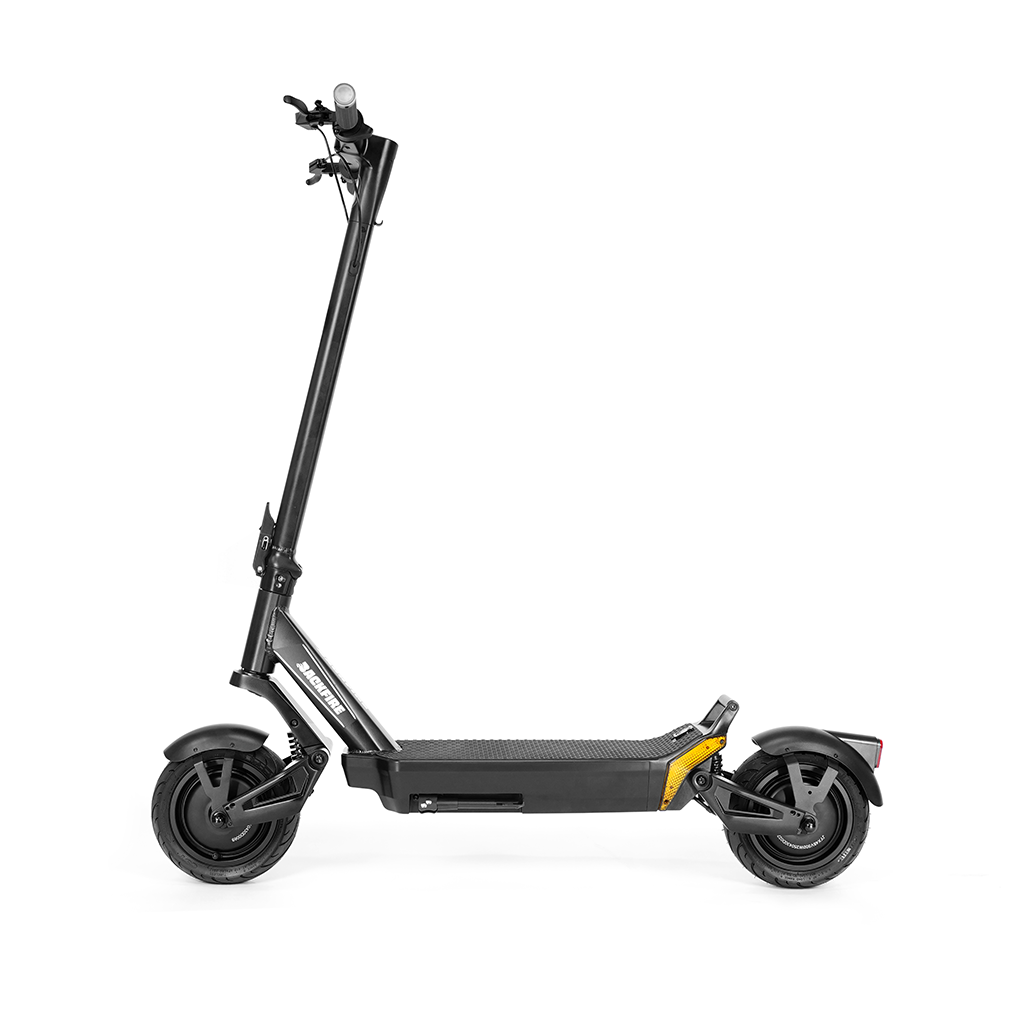
When Backfire — a brand synonymous with premium electric skateboards — decided to venture into the electric scooter market, expectations were high. The result is the Backfire Rover: a dual-motor urban scooter that brings skateboard-level engineering refinement to a format designed for practical, everyday commuting.
In this comprehensive review, we'll explore every aspect of the Rover: from raw performance numbers to daily usability, build quality to long-term ownership considerations. If you're considering the Rover as your next urban commuter, this is everything you need to know.
At a Glance: Rover Specifications
Before we dive deep, here's what you're working with:
The Dual-Motor Advantage
Why Two Motors Matter
The Rover's dual-motor configuration isn't just about raw speed — it fundamentally changes how the scooter behaves in real-world conditions.
Acceleration feel: With power distributed across both wheels, the Rover pulls away from stops with authority. There's no wheel spin, no traction loss, just smooth, confident acceleration that makes merging with traffic feel natural rather than nerve-wracking.
Hill climbing: The 25% grade capacity isn't a theoretical number. In practice, this means you can tackle most urban hills without slowing to a crawl. San Francisco grades? Seattle slopes? The Rover handles them without the motor straining or the battery draining excessively.
Braking balance: Electronic braking distributed across both motors provides more even deceleration than single-motor scooters. Combined with the dual drum brakes, you get stopping power that inspires genuine confidence at speed.
Battery & Range: The 960Wh Difference
Real-World Range Expectations
The Rover's 960Wh battery is genuinely massive for an urban scooter. Here's what that translates to in practice:
- Eco mode (20-25 km/h): 60-72 km range — perfect for long, relaxed commutes
- Standard mode (30-35 km/h): 45-55 km range — the sweet spot for most riders
- Sport mode (45-50 km/h): 25-35 km range — when you need to get somewhere fast
What affects your range:
- Rider weight (the 120 kg max load is generous, but heavier riders will see reduced range)
- Terrain (hills drain batteries faster than flat ground)
- Temperature (cold weather reduces lithium battery efficiency by 10-20%)
- Riding style (constant acceleration/braking uses more energy than steady cruising)
Charging Reality
The standard charger takes approximately 7 hours for a full charge — realistically, this means overnight charging for most users. For daily commuters, this is rarely an issue: plug in when you get home, wake up to a full battery.
For those who need faster turnaround, Backfire's charging infrastructure from their skateboard line means faster chargers may become available as accessories.
Suspension & Ride Quality
The Three-Spring System
The Rover uses a front mono spring paired with rear twin springs — a configuration that prioritizes different needs at each end of the scooter.
Front suspension: The single spring setup handles steering input and road feedback. It's tuned for responsiveness rather than plushness, keeping the front wheel predictable when navigating around obstacles or making quick directional changes.
Rear suspension: The twin springs carry more of the comfort load. Since the rear handles the bulk of rider weight (especially during acceleration), the dual-spring setup provides better shock absorption over potholes, expansion joints, and rough pavement.
10-Inch Tubeless Tires
The 10" x 2.75" tubeless rubber tires deserve special attention:
- Tubeless advantage: No inner tubes means no pinch flats. If you pick up a small puncture, tubeless sealant (sold separately or pre-installed) can often seal it without you even noticing.
- Width matters: The 2.75" width provides more contact patch than typical scooter tires, improving grip and stability at speed.
- Rubber compound: Tuned for urban conditions — good wet grip, reasonable longevity, and predictable behavior on painted road markings.
Braking System: Confidence at Speed
The Triple-Brake Setup
Stopping a 65-pound scooter traveling at 31 mph requires serious hardware. The Rover delivers with:
Dual drum brakes: Mechanical drum brakes on both wheels provide consistent, fade-resistant stopping power. Unlike disc brakes, drums are largely sealed from water and debris, making them lower-maintenance in wet conditions.
Electronic braking: Regenerative braking through the motors adds an extra layer of deceleration while recovering some energy back to the battery. This is particularly useful for controlling speed on long downhills.
Brake feel: The lever-activated drums provide progressive, predictable feel. There's no sudden grab that throws you over the handlebars — just increasing resistance as you squeeze harder.
Lighting & Visibility
A Complete Lighting Package
The Rover takes visibility seriously with a comprehensive lighting system:
Front headlamp: Bright enough for riding in complete darkness, positioned to illuminate the road ahead without blinding oncoming traffic.
Tail lamp: High-visibility LED that activates automatically when braking, alerting vehicles behind you.
Turn signals: Front and rear turn indicators — a feature often missing from even expensive scooters. These make urban lane changes and intersection navigation significantly safer.
Deck lighting: Ambient lighting around the deck adds style while also improving visibility to vehicles approaching from the side.
The LED Dashboard
The full-color LED display is readable even in direct sunlight — a detail that matters when you're checking your speed mid-commute. Information displayed includes:
- Current speed
- Battery percentage
- Trip distance
- Riding mode
- Error codes (if any)
Daily Usability Features
Kick-to-Start
Like many modern scooters, the Rover requires a push-off before the motors engage. This prevents accidental throttle activation and extends motor life by avoiding high-torque starts from a dead stop.
Cruise Control
After maintaining a steady speed for 8 seconds, the Rover's cruise control activates automatically. This is a genuine quality-of-life feature for longer commutes — your thumb gets a break, and you can focus on traffic rather than throttle position.
Folding Design
At ~65 lbs, the Rover isn't a featherweight. But the folding mechanism is well-engineered:
- Quick-release folding latch
- Handlebars fold down to reduce overall length
- Fits in most car trunks
- Can be maneuvered through doorways and into elevators (with effort)
For apartment dwellers, the folding design means you can bring it inside rather than leaving it locked outside.
Build Quality & IP65 Rating
Backfire's Skateboard DNA
The Rover benefits from Backfire's years of experience building weather-resistant electric skateboards. The IP65 rating means:
- Protected against dust ingress
- Protected against water jets from any direction
- Safe to ride in rain and through puddles
What IP65 doesn't mean: You still shouldn't submerge the scooter or pressure-wash it. But normal wet-weather commuting is perfectly fine.
Materials & Construction
- Frame: Aerospace-grade aluminum alloy construction
- Deck: Wide, grippy surface with ample room for comfortable foot positioning
- Handlebar grips: Ergonomic rubber that doesn't fatigue hands during long rides
- Wiring: Sealed connectors and properly routed cables
Who Is the Rover For?
The Ideal Rover Rider
The Rover makes the most sense for:
Urban commuters who travel 10-30 km daily and want a reliable, comfortable ride that can handle any weather.
Speed-conscious riders who appreciate having 31 mph available when traffic allows, without sacrificing range.
Hill-city residents who need dual-motor torque to tackle steep grades without slowing to a crawl.
Year-round riders who refuse to let rain stop their commute and need IP65 peace of mind.
Quality-focused buyers who'd rather invest once in a well-engineered scooter than deal with cheap alternatives that fail within a year.
Who Should Look Elsewhere
The Rover might not be right for:
- Weight-sensitive commuters who need to carry their scooter up multiple flights of stairs daily (at 65 lbs, it's substantial)
- Ultra-budget shoppers looking for the cheapest possible transportation
- Off-road enthusiasts who need pneumatic tires and serious suspension travel
The Competition
How Does the Rover Compare?
In the $700-900 price range, the Rover competes with scooters like:
The Rover's larger battery and dual motors put it in a different performance class than most similarly-priced competitors.
Long-Term Ownership
Maintenance Expectations
- Tires: Tubeless design means fewer flats, but you'll eventually need replacement rubber (every 2000-4000 km depending on riding style)
- Brakes: Drum brakes need occasional adjustment as pads wear, but less frequent attention than disc brakes
- Battery: Expect 80%+ capacity retention after 500-800 charge cycles with proper care
- General: Keep it clean, check bolts periodically, and store at moderate temperatures when possible
Warranty & Support
Backfire has built a reputation for responsive customer support through their skateboard line. The Rover benefits from the same infrastructure: accessible replacement parts, responsive service, and a company that intends to be around for the long term.
Final Verdict
The Bottom Line
The **Backfire Rover** is what happens when a company known for premium electric skateboards applies their engineering philosophy to a scooter. The result is a thoughtfully designed urban commuter that prioritizes the details serious riders care about: real-world range, confident braking, comprehensive lighting, and weather resistance. At ~$699, it's not the cheapest scooter on the market. But when you consider the 960Wh battery, dual motors, and overall build quality, the value proposition becomes clear. This is a scooter built for riders who plan to use it daily, in all conditions, for years. **Recommended for:** Urban commuters who want a single, capable scooter that can handle everything from quick errands to 30+ km daily commutes.Ready to Ride?
- Dual-motor power for hills and acceleration
- 960Wh battery for serious range
- Complete lighting system including turn signals
- IP65 water resistance for all-weather commuting
Shop Backfire Rover
Get the dual-motor urban commuter scooter with 960Wh battery and IP65 water resistance.
Shop Backfire Rover →Stay Updated
Get the latest reviews, deals, and electric mobility news delivered to your inbox.
Related Articles
Backfire Boards & Rover: A Complete 2025 Lineup Guide
From entry-level street boards to high-voltage carvers, all-terrain longboards, a dual-motor scooter, and an ultra-long-range mountain board — here's how each Backfire (and Lorentz) model actually rides and who it's for.